RETAIL
MARKET ENVIRONMENT
Significant increase in property portfolio
resulting from the
Acucap and Sycom
transaction
Apart from property fundamentals, retail property’s performance in rental levels, vacancies and
arrears is chiefly dependent on the quality and growth of consumer spending at a specific property.
While consumer spending may vary from location to location depending on the spending dynamics
of the shoppers in the catchment area, overall growth in consumer spending on a macro scale is a
function of disposable income growth, household credit extension and consumer confidence.
Household consumption expenditure showed some improvement in the beginning of 2015,
increasing by 2.8% in Q1:15 from 1.6% in Q4:14.
There are several factors that will affect real disposable income growth for the rest of 2015, and
possibly into 2016. These include a potential interest rate increase, higher food inflation and
increases in administered costs.
Private sector credit extension remains lacklustre. This is unlikely to improve as household
indebtedness increased in Q1:15.
The South African BER Consumer Confidence Index for Q2:15 registered the worst reading in almost
15 years at -15 and is substantially lower than the -6 reading during the 2008/9 recession.
PERFORMANCE
Growthpoint’s retail portfolio increased to 58 properties with a total GLA of 1 410 461m2, valued
at R28,2 billion after the Acucap and Sycom transaction.
Net property income for the financial year was R1,5 billion, representing a 23.9% increase. This
is mainly attributable to the income from acquisitions for part of the year. On a like-for-like basis
for the Growthpoint portfolio it increased by 7.9%. However, after normalisation for revenue
attributable to capital projects in the year under review, net property income increased by 7.2%.
It was slightly below budget owing to the demise of Ellerines impacting our rental income and
delays in redeveloping certain vacancies.
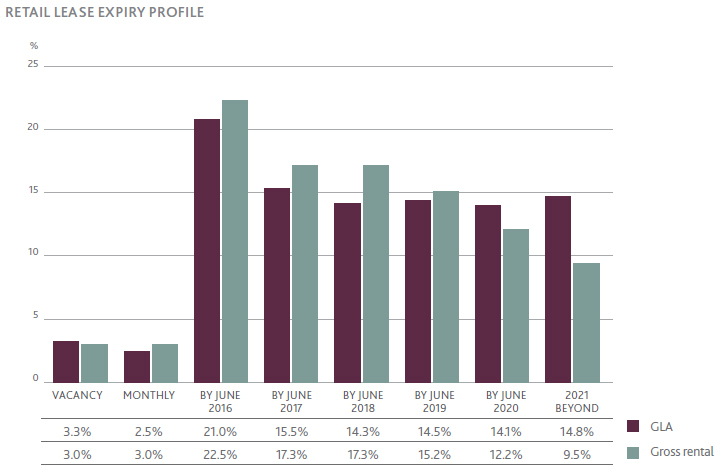
Overall, vacancies improved during the year to 3.3%. This was positively affected by selling Arcadia
Centre and acquiring the Acucap and Sycom portfolios. Most of the former Ellerines-occupied
stores were let during the year but, on average, six months’ rental income was lost. Included in
the listed vacancy is 11 240m2 currently under development. This is made up of Lakeside Mall
(4 500m2), River Square (1 800m2), Greenacres (3 300m2) and Hillcrest Corner (1 640m2). Excluding
the area under development our vacancy factor is 2.5%. Office and storage vacancies included
in the retail portfolio amount to 8 900m2 and, if excluded, results in a core retail portfolio vacancy
of 1.9%.
Our renewal success rate for the year was 87.0%, up from 75.6% in the last year when it was
negatively impacted by the non-renewal of two cinema leases. We continue to aim for a renewal
success rate of above 90%. The average increase in renewal rentals was 6.0%, lower than the
previous year’s 6.9%. This is mainly a result of negative rental growth in leases renewed at City
Mall, Klerksdorp. The lease period of renewals has remained stable at an average of 3.8 years.
Portfolio arrears, including Acucap and Sycom, amounted to R35,6 million, representing 10.2% of
collectables. This is up from the previous year’s 9.0%. Included in arrears are outstanding deposits
of R4,2 million, mainly in the Acucap portfolio because of new developments opened in the latter
half of the financial year.
Legal arrears total R16,8 million and a provision of R14,7 million is in place. Trading arrears were
R12,5 million. Some R2,5 million of arrears are attributable to the Platinum Group. While the reletting
of the stores occupied by the group will not be problematic, the chance of any recovery on
this debt is unlikely. The Post Office remains two months in arrears across our portfolio. We have
not noticed a broad deterioration of payment performance among non-national retailers.
Trading performance at our centres was
mixed with a marked deterioration in growth
rates during Q2:15. The centres trading in
affluent areas performed well, reporting year-on-year growth in trading densities of 7.7%.
However, La Lucia underperformed with its
Woolworths expansion interrupting trading.
While our Western Cape centres generally
outperformed other regions, the overall
portfolio trading densities increased by 4.7%
year-on-year. This lacklustre performance was
driven by a noticeable slow-down in trading
in lower income and commuter centres where
consumers are more exposed to adverse
macro-economic conditions and lower levels of
unsecured lending.
The continuing development of new competing
shopping centres is eroding trading densities. In
the past year the trading density at City Mall
in Klerksdorp declined by 15% as a result of
Matlosana Mall opening. In the prior financial
year, Waterfall Mall was in a similar position
after Platinum Junction opened. The centre
has recovered strongly since showing 9.4%
year-on-year trading density growth in Q2:15.
At this stage, the May 2015 opening of the
82 000m2 Baywest Centre in Port Elizabeth has
had limited impact on our centres in the city.
We expect both Walmer Park and Greenacres
to substantially hold market share.
Generally, trading densities remain healthy
within our top 10 centres where we average
monthly trading densities above R2 500/m2.
Several smaller centres are achieving trading
densities above R3 500/m2, with Constantia
Village at R6 400/m2.
Key performance areas
| |
FY15 |
|
FY14 |
|
Increase/
(decrease) |
|
| Gross property revenue (R’million) |
1 995 |
|
1 645 |
|
350 |
|
| Property expenses (R’million) |
(525) |
|
(459) |
|
66 |
|
| Net property income (R’million) |
1 470 |
|
1 186 |
|
284 |
|
| Property expense ratio (%) |
26.3 |
|
27.9 |
|
(1.6) |
|
| Vacancies (%) |
3.3 |
|
4.5 |
|
(1.2) |
|
| Arrears (R’million) |
35,6 |
|
19,3 |
|
16,3 |
|
| Bad debt provision (R’million) |
14,7 |
|
8.3 |
|
6,4 |
|
| Average gross rental (R per m2/month) |
156 |
|
149 |
|
7 |
|
| Forward yield (%) |
7.7 |
|
8.2 |
|
(0.5) |
|
| Average in-force escalation (%) |
7.4 |
|
7.7 |
|
(0.3) |
|
| Weighted average lease period (years) |
3.8 |
|
3.8 |
|
– |
|
| Asset value (R’billion) |
28,2 |
|
15,8 |
|
12,4 |
|
| Number of properties |
58 |
|
41 |
|
17 |
|
| GLA (m2) |
1 410 461 |
|
907 746 |
|
502 715 |
|
| Value (excluding bulk) per m2 (R) |
19 996 |
|
17 347 |
|
2 649 |
|
| Capital expenditure (R’million) |
352 |
|
270 |
|
82 |
|
ENVIRONMENTAL
COMMITMENT
Water efficiency, renewable energy, energy
security, energy efficiency, and waste
management are the environmental focus
areas for our retail sector. During the year
we advanced various innovative sustainable
projects at our shopping centres.
Waterfall Mall in Rustenburg continues to lead
shopping centres in our country for commercial
solar energy harvesting to minimise impacts
on the environment and generate clean energy
that responds to South Africa’s electricity
shortage.
Installing a R10 million utility scale solar power
plant on the rooftop of the mall has provided
it with 876 746kWh hours of clean energy over
the past
12 months. This is enough power for
2 884 households (at 304kWh per house) and
offsets 868 tonnes of CO2 a year.
The continuing electricity load shedding has
necessitated accelerating the roll-out of our
solar programme at other shopping centres.
Solar power plants installed at our centres will
be limited to around 1MWp in size, covering
10 000m2 of roof area per centre. The
installation of a 1.16MWp at Northgate
(50% owned) has been approved at a total
cost of R23,3 million and will render a
commercially acceptable yield on capital
cost. We anticipate installations at Brooklyn
Mall, Kolonnade and Constantia Village will
be approved this year. Growthpoint plans
to introduce similar installations at our
15 major shopping centres over the next
two years.
Unfortunately, until battery storage technology
improves and becomes more affordable, solar
energy cannot fulfil its role as an effective
alternative to grid-supplied power. While the
quickest and easiest solution for addressing
the electricity supply problems seems to be
installing diesel back-up generators, we see this
as a poor solution for costs, supply certainty
and sustainability. We will therefore limit
back-up generation to produce enough power
for restaurants and service operators, such as
hair salons.
We have negotiated preferential agreements
for our smaller tenants to buy inverters and
battery systems that enable them to trade
for periods of up to three hours during load shedding. This is a more cost-effective
alternative, and substantially more environment
friendly.
After partnering with Eskom to install energy-efficient
lighting in all of our malls over a three-year
period from 2012 to 2014, we have now
introduced an energy efficient lighting life cycle
replacement system. This ensures we uphold
the achieved savings of 5,1 million kWh per year
in our malls.
We continued our successful recycling
programme, recycling 167 364kg of cans, glass,
cardboard, paper and plastic at our shopping
centres. Recycling collection points for our
shoppers and the public to use are now in
several of our shopping centres. We encourage
shoppers to actively take part in recycling at
source by replacing mall refuse bins with bins
for different waste types.
A sustainability project to produce solar energy,
harvest rainwater, and convert waste into
energy was successfully completed in 2015 at
Bayside in Cape Town. The aim of this project
is to be more self-sufficient by generating our
own energy and reducing our waste to landfill.
As part of the redevelopment and extension
of Hillcrest Corner, an integrated grey water
harvesting system will be installed. This
will result in the reuse of most of the water
consumed at the proposed Virgin Active gym.
The unintended consequences of the
deterioration in services delivered by local
authorities includes the forced installation of
mass water-storage at several of our shopping
centres. While we are harvesting rainwater as
part of our water-efficiency, the intent is to
introduce grey water harvesting where possible,
over time.
PROSPECTS
Macro-economic factors do not support
increasing consumer spending, yet retail space
continues to grow, albeit at a slower rate.
Several new shopping centres have opened in
the past year, some competing directly with
Growthpoint centres.
Without exception the bigger new shopping
centres are substantially underperforming
industry benchmarks for trading densities.
Developers had to resort to unusually generous
allowances and turnover-based leases to
tenant these centres. The supply and demand
equilibrium has been distorted, leading to
cannibalisation of turnover among some
retailers.
For retailers, lacklustre growth in sales means
higher occupancy cost ratios, a decrease in sales
per employee and margin erosion. However,
as retailers are tied into five-year leases, and
sometimes longer, in new underperforming
shopping centres, they are forced to mitigate
the situation by trying to reduce costs at existing
shopping centres. Retail landlords are subjected
to extremely difficult renewal negotiations,
especially where existing shopping centres
were adversely impacted by new competing
centres. Also, turnover rentals, which make
up a small portion of our income, are coming
under pressure because of weak sales growth
nationally.
We are still seeing some interest from
international retailers new to our country.
While the performance of retail in the Cape
Town area looks promising, Gauteng retail
remains under stress. Growthpoint is well
positioned to benefit from the more favourable
dynamics in the Western Cape with our
increased geographic diversification and
exposure in the area, achieved in the Acucap
and Sycom transaction. These acquisitions
have also gained us exposure in otherwise
inaccessible nodes.
There is some work to do on the new shopping
centres acquired from Acucap and Sycom.
We believe there is value that we can unlock.
Except for Watercrest, which is newly opened,
we are confident of the quality of the portfolio
in terms of its revenue, tenant mix and market
position. The newly acquired centres are very
much in line and compatible with our existing
portfolio. All the Acucap and Sycom centres
have gone through a cycle of refurbishment.
With the exception of N1 City where we are
minority owners, most centres were extended
and upgraded in the last few years. That said, we
always work to improve and refine each of our
malls and continuously consider new tenants.
Our centres are never a finished product.
Growthpoint’s retail portfolio remains
relatively insulated by serving the upper end of
the market. However, even South Africa’s top-end
consumers are not immune to the tough
economic landscape and face pressures like
double-digit increases in the cost of education.
We will focus on vacancies in the coming year.
While we are aware that everything is going
to be more difficult in this economy, unless
we experience a national retailer failure, we
should be able to reduce vacancies even further
over the next 12 months. Our only big pocket
vacancies are the former cinema areas at Lakeside Mall and Hatfield Square, and we are
exploring several plans for these areas. We’ve
made good inroads in filling the former Ellerines
space, which is now effectively all let.
The coming year will be a consolidation
phase for our retail division. We’ll bring the
Growthpoint, Acucap and Sycom portfolios
onto the same system and physically
consolidate the management of all three
portfolios. We’ll also assess each acquired
asset for suitability for our core portfolio, and
identify anything we need to trade out of.
Growthpoint will continue to find opportunities
for growth, both within our retail portfolio and
through acquisition. We remain interested
in the Western Cape in particular. While it is
almost impossible to find assets of a significant
size, we will consider smaller retail properties
that match our investment criteria. We will also
continue to improve and extract value from all
our assets.
| Renewal success rate of 87.0% |
We will continue to
improve and extract
value from all our
assets |
 |
| Growthpoint’s retail portfolio remains
relatively insulated by serving the upper
end of the market |
Top 10 retail tenants
| |
Tenant |
GLA*
m2 |
% of
total retail
GLA |
| 1 |
Edcon Holdings Proprietary Limited |
129 046 |
9.5 |
| 2 |
The Foschini Group Limited |
53 860 |
3.9 |
| 3 |
Shoprite Holdings Limited |
149 133 |
10.9 |
| 4 |
Mr Price Group Limited |
55 921 |
4.1 |
| 5 |
Pick n Pay Stores Limited |
115 430 |
8.5 |
| 6 |
Pepkor Holdings Limited |
49 325 |
3.6 |
| 7 |
Truworths International Limited |
32 653 |
2.4 |
| 8 |
Massmart Holdings Limited |
66 900 |
4.9 |
| 9 |
Woolworths Holdings Limited |
85 872 |
6.3 |
| 10 |
Clicks Group Limited |
27 922 |
2.0 |
| Total of Top 10 |
766 062 |
56.1 |
| * Ranked in terms of gross monthly rental. |
Top 10 retail properties by value
| |
Property name |
Location |
Value
Rm |
% of total
retail portfolio |
GLA*
m2 |
% of
total retail
GLA |
| 1 |
Brooklyn Mall & Design Square (75%) |
Pretoria |
2 079 |
7.4 |
55 935 |
4.0 |
| 2 |
Festival Mall |
Kempton Park |
1 730 |
6.1 |
81 146 |
5.7 |
| 3 |
Waterfall Mal |
Rustenburg |
1 361 |
4.8 |
49 196 |
3.5 |
| 4 |
Lakeside Mall |
Benoni |
1 274 |
4.5 |
67 536 |
4.8 |
| 5 |
Vaal Mall (77.9%) |
Vanderbijlpark |
1 239 |
4.4 |
38 337 |
2.7 |
| 6 |
Bayside Centre |
Cape Town |
1 159 |
4.1 |
45 646 |
3.2 |
| 7 |
Key West |
Krugersdorp |
1 144 |
4.1 |
52 245 |
3.7 |
| 8 |
Greenacres |
Port Elizabeth |
1 134 |
4.0 |
40 424 |
2.9 |
| 9 |
La Lucia Mall |
Durban |
1 123 |
4.0 |
36 424 |
2.6 |
| 10 |
Kolonnade (50%) |
Pretoria |
1 033 |
3.7 |
38 098 |
2.7 |
| Total of Top 10 |
|
13 276 |
47.1 |
504 987 |
35.8 |
| RETAIL PROPERTIES TOP 10 BY VALUE |
| 1 410 461m2 total GLA |
| R2,0 billion total revenue |
| The monthly trading densities of
our Top 10 centres average above
R2 500/m2 |
| BROOKLYN MALL & DESIGN SQUARE (75%) |
PRETORIA |
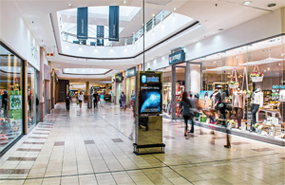
Brooklyn Mall is nestled in the affluent suburbs of Pretoria’s cosmopolitan
area of Brooklyn, surrounded by established upmarket residential homes,
corporate offices and a large contingent of embassies and diplomatic
properties. Brooklyn Mall, measuring 74 580m², is the premier shopping
destination in Pretoria. It offers shoppers a full complement of national
retailers, specialist boutiques, restaurants and coffee bars and the best
of home and décor shops. The centre is visited by more than 12 million
shoppers a year and has consistently exceeded national retail sales growth. |
 |
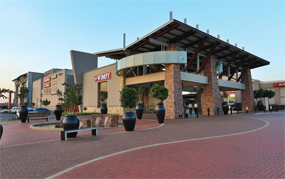
| FESTIVAL MALL |
KEMPTON PARK |
This 81 146m2 regional centre is close to the CBD and near the residential
areas of Kempton Park. Due to the mall’s close proximity to public transport,
the centre also benefits from strong support from the Tembisa area. The tenant
mix covers a wide range of categories, with a strong national representation.
Trade is growing steadily, with an average monthly trading density of over
R2 000/m2 with foot counts averaging 800 000 visitors a month. The
centre also includes a Ster Kinekor cinema complex and an ice rink. |
 |
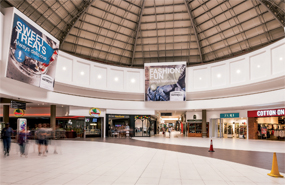
| WATERFALL MALL |
RUSTENBURG |
Waterfall Mall, with its adjacent value centre, forms a 60 000m² regional
shopping centre that draws shoppers from as far afield as Botswana.
Located in the upmarket suburbs of Rustenburg, the centre has easy access
from the R24 and N4 highway. The size of the centre allows for an extensive
representative tenant mix which includes most national retailers as well as
a variety of specialised retailers. The mall has an average monthly trading
density of over R2 800/m² which ensures strong demand for space. |
 |
|
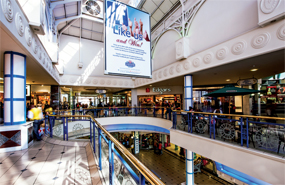
Located on the southern banks of the Civic Lake in Benoni, Lakeside Mall
regional shopping centre is a local landmark due to its distinctive design.
The two-level centre incorporates several different retail areas including
5 000m² of usable outdoor space. With 67 536m² of lettable area, the
centre features all the major retail anchors. The popular centre attracts
more than 10 million shoppers a year. |
 |
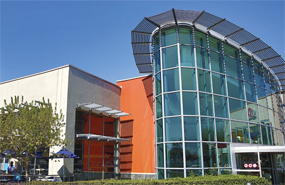
| VAAL MALL (77.9%) |
VANDERBIJLPARK |
At 49 000m2, Vaal Mall is the dominant regional centre in the Vaal area. Its catchment area extends to Sasolburg. The mall also benefits from domestic tourism, being near the Vaal River. It has a strong tenant mix with a high percentage of nationals anchored by all the traditional South African majors. The average monthly trading density exceeds R3 000/m2, with the fashion category being particularly strong. |
 |
|
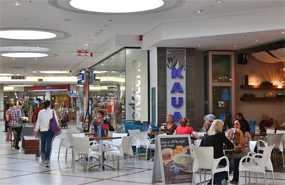
Bayside is a regional shopping centre of 45 646m2, in a growing residential
node on the western coastline of Cape Town. It serves the greater west
coast suburbs of Cape Town including Tableview, Parklands, Bloubergstrand,
Sunset Beach and Melkbosstrand. The BRT public bus route has its second
largest bus station next to the centre which has resulted in an increased
foot traffic to the centre. |
 |
|
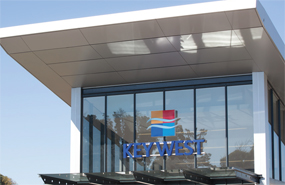
Key West Shopping Centre is a 52 245m² regional shopping centre serving
the greater Krugersdorp area including Randfontein and Kagiso. It has a full
component of national fashion retailers and banks. Its entertainment is
anchored by a Nu Metro Cinema complex and supplemented with a food
court, family restaurants and a Virgin Active gym. The centre attracts
9,6 million customers and grew its visitors by 5.8% in FY15. |
 |
| GREENACRES |
PORT ELIZABETH |
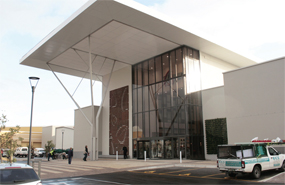
The 40 424m² Greenacres Shopping Centre is part of a larger retail node
of 88 000m². It attracts an average of 950 000 customers a month. The
mall is linked to the adjacent Bridge Shopping Centre. It is surrounded
by established residential suburbs, offices, educational institutions and a
hospital. |
 |
|
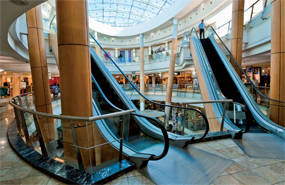
This 36 424m2 small regional centre is in the heart of one of Durban’s most
affluent suburbs, La Lucia. It serves an upmarket LSM 9 and 10 shopper.
In recent years it has attracted more young and aspirant professionals.
The centre’s tenant mix encompasses many top national, local and some
international retail brands and is strongly focused on convenience, lifestyle,
food, and the health and beauty categories. |
 |
|
The 76 196m² Kolonnade Shopping Centre was developed in 1995 and
has been extended numerous times as demand for retail space at the
centre continues to grow. It is located to the north of Pretoria, serving a
wide catchment area. Annual retail sales at the centre exceed R3,1 billion
and trading densities are substantially higher than comparable shopping
centres. Kolonnade attracts around
11 million shoppers a year and is coowned
with Sasol Pension Fund. |
 |