Corporate Governance
| PHILOSOPHY
Governance at Growthpoint meets with or exceeds the
provisions and principles of the King III Report and Code, which
are also followed for purposes of annual reporting. In addition to
the King III principles, specific, meritorious corporate governance
criteria employed by Growthpoint’s institutional investors are
also considered and applied as required. These include the Code
for Responsible Investment in South Africa (CRISA).
As part of Growthpoint’s and the Board’s commitment to sound
governance, the directors endeavour to ensure that the business
is conducted with integrity and accountability, as per the Code
of Ethics incorporated in the Board Charter. This entails on-going
improvement of structures, policies and practices implemented
to enhance corporate governance in the company’s best interests
and for the ultimate benefit of all stakeholders.
The company has remained compliant with the Companies Act
2008, as amended (the Act). The Board Charter as well as the
Terms of Reference of Board committees are aligned with the
provisions of the Act, as are Growthpoint’s own statutes and
those of its subsidiaries. |
|
 |
| 2015 CORPORATE
GOVERNANCE ASSESSMENT
The company has completed its annual
governance self-assessment by applying an
accredited governance assessment tool, with
a very satisfactory outcome (Overall rating:
AAA – highest accreditation), as reflected in the
tables that follow: |
| The Board is guided in all matters by the
Board Charter which sets out its
responsibility |
KING III GOVERNANCE REGISTER AT: 25 AUGUST 2015
| AAA |
Highest
application |
AA |
High
application |
BB |
Notable
application |
B |
Moderate
application |
C |
Application to
be improved |
L |
Low
application |
|
|
|
|
|
|
|
|
|
|
|
|
| |
|
Growthpoint Properties Limited – 1987/004988/06 |
IoDSA
GAI
score |
Applied/
partially
applied/
not applied |
| + |
|
Chapter 1: Ethical leadership and corporate citizenship |
AAA |
Applied |
| + |
|
Chapter 2: Boards and directors |
AAA |
Applied |
| + |
|
Chapter 3: Audit committees |
AAA |
Applied |
| + |
|
Chapter 4: The governance of risk |
AAA |
Applied |
| + |
|
Chapter 5: The governance of information technology |
AAA |
Applied |
| + |
|
Chapter 6: Compliance with laws, rules, codes and standards |
AAA |
Applied |
| + |
|
Chapter 7: Internal audit |
AAA |
Applied |
| + |
|
Chapter 8: Governing stakeholder relationships |
AAA |
Applied |
| + |
|
Chapter 9: Integrated reporting and disclosure |
AAA |
Applied |
| |
|
Overall score |
AAA |
|
| |
|
Growthpoint Properties Limited – 1987/004988/06 |
Fully
complied/
review |
| + |
|
JSE Corporate Governance Listing Requirement |
Fully
complied |
| |
Governance element |
|
Brief summary of the application of King III principles |
| 1. |
Ethical leadership
and corporate
citizenship |
|
The Board:
| • |
provides effective supervision and leadership based on ethical imperatives |
| • |
directs strategy and operations for sustainable business |
| • |
annually reviews Group strategy |
| • |
ensures Growthpoint is a responsible corporate citizen |
| • |
ensures company ethics are managed effectively, under the auspices of the Social, Ethics and Transformation Committee in terms of the Act |
| • |
tracks measurements and key performance indicators for effective corporate social responsibility, green initiatives and programmes dealing with environmental sustainability |
| • |
monitors ethical risks and opportunities |
|
| 2. |
Boards and directors |
|
The Board:
| • |
ensures that it acts in the best interests of the company |
| • |
acts as the focal point for, and custodian of, corporate governance and the governance of risk including information
technology risk |
| • |
recognises that strategy, risk, performance and sustainability are inseparable |
| • |
endeavours to ensure that the Audit Committee and the internal audit function remain effective and independent |
| • |
ensures that Growthpoint complies with applicable laws and considers adherence to non-binding rules, codes and
standards |
| • |
ensures that the roles of Board Chairman and the company’s Chief Executive Officer are separated |
| • |
maintains a balance of power, with a majority of independent non-executive directors |
| • |
ensures the Chairman is an independent, non-executive director whose role is defined in the Chairman’s Charter |
| • |
annually elects the Chairman of the Board and committees (save for the Audit Committee whose members and
Chairman are elected at annual general meetings) and would also deal with the succession of the Deputy Chairman
if necessary |
| • |
appoints the Chief Executive Officer |
| • |
includes a Financial Director in a full-time, executive capacity, in accordance with the JSE Listings Requirements |
| • |
implements and periodically reviews an effective succession plan for senior management via the Remuneration
Committee, which process is monitored by the Risk Management Committee |
| • |
works within an established framework for effective delegation of authority |
| • |
appoints directors by involving the whole Board, on recommendation of the Nomination Committee, through
a formal process governed by the Nomination Committee’s Terms of Reference and by the company’s MOI (the
removal of a director without shareholder approval, in terms of section 71(3) of the Act, is incorporated into the
company’s MOI) |
| • |
ensures bespoke induction and development of new directors |
| • |
is assisted by a competent, suitably qualified and experienced Company Secretary who is not a director and who
maintains an arm’s-length relationship with the Board (formal assessment performed by the Board in June 2015) |
| • |
performs self-evaluation of the Board and its committees annually, with formal feedback. Directors are not
individually assessed but the Board and committee self-assessment gives members the opportunity to comment on
the performance and contribution of their colleagues |
| • |
annually assesses and has, in May/June 2015, assessed the independence (or not) of every non-executive director
including those with tenures exceeding nine years |
| • |
delegates to well-structured, appropriately constituted committees without abdicating its own responsibilities |
| • |
applies the governance framework to Group subsidiaries and their boards |
| • |
ensures, on the Remuneration Committee’s recommendations (based on expert outside opinion) that directors and
executives are remunerated fairly and responsibly |
| • |
ensures that remuneration of the directors is disclosed fully and individually |
| • |
obtains approval from the shareholders at each AGM for non-executive directors’ fees in respect of the ensuing
financial year |
| • |
asks shareholders at the AGM for approval of Growthpoint’s remuneration policy (currently a non-binding vote in
South Africa) |
|
| 3. |
Audit committees |
|
The Audit Committee:
| • |
is effective and independent, and ensures that its members, including the Chairman, are suitably skilled and
experienced non-executive directors |
| • |
oversees the Group’s integrated reporting and reviews and disclosure of sustainability issues |
| • |
satisfies itself annually of the expertise, resources and experience of the company’s finance function and of the
Financial Director’s suitability |
| • |
oversees the internal audit function, receives internal audit reports at each of its quarterly meetings and approves the annual internal audit plans |
| • |
plays an integral role in the Group’s overall risk management process |
| • |
specifically oversees financial reporting risks, internal financial controls, fraud risk as it relates to financial reporting,
and IT risk as it relates to financial reporting |
| • |
recommends the appointment of the external auditor and oversees external audits |
| • |
approves and implements a policy for non-audit services provided by the external auditor |
| • |
engages external specialists on material sustainability and integrated reporting aspects |
| • |
reports quarterly to the Board and annually to shareholders |
| • |
annually assesses its effectiveness as a committee |
|
| 4. |
The governance
of risk |
|
The Board is responsible for the governance of risk, which it manages through an independent Risk Management
Committee. This Committee also monitors the company’s compliance with the qualifying REIT criteria laid down by
the JSE’s Listings Requirements (Section 13), which it may delegate to the Audit Committee. The governance of risk is
covered later in this report |
| 5. |
The governance
of information
technology (IT) |
|
| • |
The Board is responsible for the governance of IT risk via the Risk Management Committee, and for governance of
financial reporting risk via the Audit Committee |
| • |
The Chief Information Officer, who attends meetings of both the Risk Management and Audit committees, and is an
Exco member, is responsible for the IT governance framework |
| • |
The external auditors periodically assess IT governance against King III |
| • |
IT strategy is part of the Group’s strategic plan and business processes |
| • |
The Board tracks and evaluates material IT investments and expenditure to ensure IT infrastructure is managed
efficiently |
| • |
IT forms an integral part of the company’s risk management and IT internal audits are performed periodically by
qualified and experienced outside parties |
|
| 6. |
Compliance with
laws, rules, codes
and standards |
|
The Board:
| • |
ensures that the company complies with applicable laws and considers adherence to non-binding rules and codes |
| • |
makes compliance a standing item on the Risk Management Committee agenda |
| • |
recognises that compliance is an ethical imperative |
| • |
acknowledges that compliance risk is an integral part of Growthpoint’s risk management process |
| • |
ensures effective compliance frameworks and processes are in place |
| • |
ensures that compliance officers are well qualified, and have ongoing interaction with the Risk Management
Committee and/or executive management on compliance matters |
| • |
has a working knowledge of applicable laws, rules, codes and standards, as well as the potential impact on the
company and its business |
|
| 7. |
Internal audit |
|
| • |
The Board, via the Audit Committee, ensures that internal audits are effective and risk based |
| • |
The Internal Audit Charter is approved and periodically reviewed by the Audit Committee |
| • |
The Head of Internal Audit and Risk Management reports to the Audit Committee quarterly, on the design and
operating effectiveness of the company’s internal controls |
| • |
Internal Audit is strategically positioned to achieve its goals |
| • |
The internal audit function is appropriately resourced for the complexity and volume of work required |
| • |
The Head of Internal Audit and Risk Management has a standing invitation to attend Executive Management
Committee (Exco) meetings |
|
| 8. |
Governing
stakeholder relationships and
dispute resolution |
|
| • |
The company has a formal investor relations policy and an Investor Relations Officer |
| • |
The Board recognises that stakeholder perceptions can affect the company’s reputation and seeks to ensure the
equitable treatment of all stakeholders |
| • |
Management proactively deals with stakeholder relationships by balancing various stakeholder interests appropriately
and in the company’s best interests |
| • |
The Board ensures that disputes are resolved as effectively, efficiently and expeditiously as possible |
| • |
Where necessary, resolution of both internal and external disputes relies on the Association of Arbitrators of SA.
Employees involved in any such process will be assisted by the company’s legal advisor |
| • |
Communication processes and policy for interaction with the media and stakeholders are approved by the Board |
|
| 9. |
Integrated reporting
and disclosure |
|
| • |
The Board is responsible for the integrity of the company’s integrated report, with the assistance of the Audit Committee |
| • |
Annual sustainability reporting and disclosure is overseen by the Audit Committee |
| • |
Compliance with the Global Reporting Initiative, as well as the formal guidelines on reporting by the Integrated Reporting Committee of South Africa (IRC), is assessed internally and externally |
|
The full register of the company’s application of the King III Principles can be found on the company’s website.
THE BOARD OF DIRECTORS
During the year under review and as at the
date of issue of this report, Growthpoint
had a unitary board comprising 14 directors
in total: three executive directors and
11 non-executive directors, nine of whom are
and were throughout the past financial year,
independent.
The Board’s role is to provide
strategic direction and leadership,
to promote shareholder value
and enhance the sustainability
of the business, to the benefit
of the company and all its
stakeholders. To ensure they act
with independence and integrity,
directors are required to abide
by Growthpoint’s Code of Ethics
and policies promoting ethical
behaviour.
The directors annually declare their financial
interests, as per the Act. Directors’ interests
in the company’s shares in issue on 30 June
2015 are set out in the directors’ report to the
annual financial statements (AFS).
The majority of the non-executive directors
are independent. In line with the King III
principles, non-executive directors who,
directly or indirectly, have an interest in
Growhtpoint’s BEE structure, as well as those
with related-party interests, are not regarded
as independent.
The business experience of each of the
executive and non-executive directors enables
them individually, and as a board, to evaluate
strategy, assess the company’s performance
and at all times to act in Growthpoint’s best
interests.
Non-executive directors have unrestricted
access to company information and meet the
management without the presence of executive
directors. To help them fulfil their responsibilities
effectively, non-executive directors may also
seek independent professional advice, which is
paid for by the company. The Audit Committee
provides, as a standing item on the agenda of
regular meetings, for combined or separate
closed sessions with management, external
auditors and the internal auditor to be held
after every meeting as and when necessary.
The King III Report recommends that the
independence of non-executive directors
serving more than nine years be assessed. The
Board has, during May/June 2015, reviewed
the status of all of the non-executive directors,
in terms of the JSE-applied definition of
independence as contained in the King III Report, including the following directors with
tenures exceeding nine years who have been
assessed as indicated below:
| Name of director |
|
Year of
appointment |
|
Number of
years in service |
|
Status |
| Mzoli Diliza* |
|
2001 |
|
14 years |
|
Not independent |
| Peter Fechter |
|
2003 |
|
12 years |
|
Independent |
| John Hayward |
|
2001 |
|
14 years |
|
Independent |
| Hugh Herman |
|
1995 |
|
20 years |
|
Independent |
| Francois Marais |
|
2003 |
|
12 years |
|
Independent |
| Herman Mashaba |
|
2006 |
|
9 years |
|
Independent |
| Ragavan Moonsamy |
|
2005 |
|
10 years |
|
Independent |
| Frederick Visser |
|
2001 |
|
14 years |
|
Independent |
* BEE partnership
GROWTHPOINT PROPERTIES AUSTRALIA LIMITED (GOZ)
GOZ reports to Growthpoint’s Risk
Management Committee annually on the
applicability of the King III principles to its
governance policy, as well as additional
parameters required by Australian law. GOZ’s
governance policy conforms with or exceeds
the major principles of the King III Code.
Growthpoint directors hold positions on GOZ’s
Board and committees, as follows:
Board: LN Sasse, EK de Klerk and JF Marais
Audit, Risk and Compliance Committee: EK de Klerk
Nomination, Remuneration and HR
Committee: LN Sasse (Chairman) and JF Marais
RE-ELECTION OF DIRECTORS AND NEW APPOINTMENTS
Directors who retire by rotation or otherwise
at AGMs are those longest in office and those
appointed by the Board since the last AGM.
Retiring directors are named in the directors’ report and AGM Notice included with the
Notice and Proxy of Annual General Meeting
and Summarised Financial Statements. The
Board, through the Nomination Committee,
recommends (or not), as the case might be,
retiring non-executive directors for re-election
or election at the AGM.
Appointments of new directors are handled
by the full Board, on the recommendation of
the Nomination Committee. New directors
are adequately informed about Growthpoint’s
business and policies, as well as meeting dates
and procedures. All directors receive the Board
Charter during induction and once a year for
review at the appointed Board meeting.
One-third or nearest that number of the non-executive
directors are subject to retirement by
rotation and re-election by shareholders at the
AGM each year.
Executive directors are, in terms of
Growthpoint’s MOI, not subject to retirement
by rotation at the AGM. This is in line with
King III recommended best practice, and
supported by the JSE, for South African listed
companies.
ATTENDANCE AT MEETINGS
The Board meets quarterly and on an ad-hoc basis, if required. The quorum requirements of
Growthpoint’s MOI are always considered when scheduled, ad-hoc or special meetings are
convened. Due regard is given to recusal of directors where conflicts of interest or related-party
positions exist or could arise.
Details of attendance at Board and committee meetings in FY15 are set out below. Board members
are encouraged to serve on at least two Board committees.
Four scheduled Board meetings were held during FY15. In all cases in FY15 where directors or
committee members were unable to attend a meeting, the Board or respective committee accepted
their justified leave of absence.
Attendance at meetings
| Director |
|
Board |
|
Audit |
|
Risk
Management |
|
Property |
|
Social,
Ethics and
Transformation |
|
Remuneration |
|
Nomination |
|
| JF Marais |
|
4/4 |
|
1/6* |
|
3/4* |
|
|
|
|
|
5/5 |
|
1/1 |
|
| EK de Klerk |
|
4/4 |
|
4/6 |
|
|
|
4/4 |
|
4/4 |
|
5/5 |
|
0/1 |
|
| MG Diliza |
|
3/4 |
|
|
|
|
|
4/4 |
|
4/4 |
|
|
|
1/1 |
|
| PH Fechter |
|
4/4 |
|
6/6 |
|
|
|
4/4 |
|
|
|
|
|
1/1 |
|
| LA Finlay |
|
4/4 |
|
6/6 |
|
|
|
|
|
4/4 |
|
|
|
0/1 |
|
| JC Hayward |
|
4/4 |
|
6/6 |
|
4/4 |
|
|
|
|
|
|
|
1/1 |
|
| HS Herman |
|
4/4 |
|
|
|
|
|
4/4 |
|
|
|
5/5 |
|
1/1 |
|
| HSP Mashaba |
|
4/4 |
|
|
|
|
|
|
|
|
|
5/5 |
|
|
|
| SP Mngconkola |
|
4/4 |
|
|
|
4/4 |
|
|
|
3/4 |
|
|
|
|
|
| R Moonsamy |
|
4/4 |
|
|
|
|
|
4/4 |
|
4/4 |
|
|
|
|
|
| NBP Nkabinde |
|
4/4 |
|
|
|
4/4 |
|
|
|
4/4 |
|
|
|
|
|
| LN Sasse |
|
4/4 |
|
1/6* |
|
4/4 |
|
4/4 |
|
|
|
5/5 |
|
1/1 |
|
| CG Steyn** |
|
2/2 |
|
4/4 |
|
|
|
2/2 |
|
|
|
|
|
|
|
| FJ Visser |
|
4/4 |
|
|
|
4/4 |
|
|
|
|
|
4/5 |
|
|
|
| G Völkel |
|
4/4 |
|
6/6 |
|
4/4 |
|
4/4 |
|
4/4 |
|
|
|
|
|
* By invitation
** Retired 18 November 2014
DEALINGS IN THE COMPANY’S SHARES
In terms of both Group policy and JSE Listings
Requirements, directors of both the Group
and its major subsidiaries, in addition to the
Company Secretary, must obtain prior written
clearance from the CEO and/or Chairman if they
intend to deal in Growthpoint shares, whether
directly or indirectly. This policy also applies to
Exco members, directors of major subsidiaries
and other members of senior management.
Directors and employees who are privy to price-sensitive
information may not deal, directly or
indirectly, in Growthpoint’s shares until such
information is made public.
Closed periods are imposed on directors and
staff in relation to interim and annual financial
results and, from time to time during specific
corporate actions.
DIRECTORS’ REMUNERATION
Directors’ remuneration is subject to annual
review by the Remuneration Committee
(RemCo), and subsequent approval by the
Board of the proposed fees to be submitted
for approval at the AGM. The fees for
FY15 were approved at the AGM held on
18 November 2014.
The most recent review on non-executive
directors’ remuneration included
benchmarking by professional consultants.
The RemCo proposals for FY16 were approved
by the Board on 25 August 2015. These
recommendations will be presented at the AGM
to be held on 17 November 2015. At the same
time, shareholders will be asked to approve,
by way of a non-binding vote, the company’s
overall remuneration policy for the coming
year. The Remuneration report containing this
information is included in the Key Matters
section of this report.
Directors’ remuneration is disclosed in the
AFS in line with JSE Listings Requirements. The
key performance areas by which directors and
management are measured are also described
in the Remuneration report.
THE CHAIRMAN
The roles of the Chairman and CEO are separate
and they operate independently of each other.
The Chairman, Mr JF Marais, is an independent,
non-executive director. His responsibilities
are contained in, but are not limited to, the
Chairman’s Charter. They include:
| • |
providing overall leadership of the Board and
its committees |
| • |
leading and managing the business of the
Board, without limiting the Board’s collective
responsibility |
| • |
serving as the link between the Board and
management of Growthpoint and, with the
Remco, assessing the performance of the
CEO at least once a year |
| • |
assessing, in liaison with the CEO, the
performance of the other executive directors
at least annually. |
BOARD RESPONSIBILITIES AND ACCOUNTABILITY
The Board is guided in all matters by the Board
Charter which sets out its responsibilities
(available on the company’s website or from
the Company Secretary).
These include:
| • |
governing, directing and monitoring the
performance of the business as a going
concern |
| • |
approving the company’s strategic objectives |
| • |
ensuring effective management of the
company |
| • |
managing risks to the business, mainly
through the Risk Management and Audit
committees |
| • |
providing direction to management |
| • |
presiding over material business decisions |
| • |
documenting the Board’s Terms of Reference,
purpose, responsibilities and authority |
| • |
governance matters such as Board
membership, meeting procedures and
ethical conduct. |
The Board (either itself or through the
Nomination Committee) periodically reviews
its composition relative to skills, expertise
and experience needed to provide strategic
direction and leadership, and representivity in
terms of gender and race.
The non-executive directors are independent
of management and are free from relationships
that could affect their judgement as directors.
The Board is accountable to the company, but
is always cognisant of stakeholder expectations
and interests. In its decision-making, the Board
adopts an inclusive approach to governance.
In June/July 2015, the Board, along with the
Audit, Property, Risk Management and Social,
Ethics and Transformation committees,
conducted a formal self-assessment process.
The overall outcome was positive, and feedback
was provided to the Board and the respective
committees at meetings held in August 2015.
THE COMPANY SECRETARY
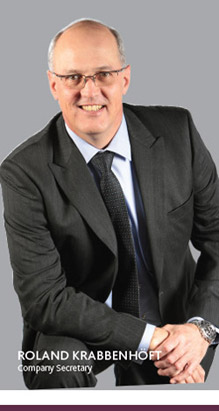
The Company Secretary, Mr RA Krabbenhöft,
was formally evaluated by the directors in
June 2015 and has been found to be suitably
competent, experienced and qualified for his
position. The evaluation followed the format
suggested in King III. The Company Secretary
holds a Fellowship with Chartered Secretaries
Southern Africa (1993) and the Chartered
Institute of Business Management (1993) and a
Diploma in Corporate Governance (RAU – 1997),
and has been involved as a Company Secretary
and Group Company Secretary of JSE-listed
companies since 1987. He is not a director of
the company but a full-time employee and
maintains an arm’s length relationship with the
Board and the directors of the company.
CODE OF ETHICS AND BUSINESS CONDUCT
The Code of Ethics aims to ensure that
Growthpoint conducts its business in line
with the highest ethical standards. The code
in particular seeks to ensure compliance with
relevant legislation and regulation, in a manner
that is beyond reproach. The Code is available
to employees and other stakeholders, as are
Growthpoint’s mission and value statements.
Both the Code of Ethics and Growthpoint’s
mission and value statements are posted on the
company website.
THE COMPANY’S CODE OF ETHICS IS AS FOLLOWS
The Board of Growthpoint commits itself to
ensure, as far as it lies within its power to do
so, that the company and its agents conduct
the business according to the highest ethical
standard and, in particular:
| • |
comply with all laws of the country that
affect the company |
| • |
comply with the rules of the JSE Limited |
| • |
not act in any way that may be regarded as
harmful business practice |
| • |
act in the best interests at all times of all the
stakeholders |
| • |
are transparent in disclosing all material
information that may influence investors
and potential investors |
| • |
conduct the business as a responsible
corporate citizen, having regard for the
impact the business may have on the public
and the environment |
| • |
trade in securities of the company only in
open periods and with the prior written
permission of the Chairman and/or CEO |
| • |
not trade in competition with the company |
| • |
not hold positions that give rise to a conflict
of interests and, should any potentially
conflicting situations arise, to make full,
prior written disclosure to the Board and
abstain from participating in any discussion
or voting on the matter, unless the Board
consents thereto. |
POLICIES PROMOTING ETHICAL CONDUCT
Growthpoint has various policies in place to
promote and safeguard ethical behaviour and
integrity among management and employees.
These policies include:
| • |
the company’s mission and value statements |
| • |
employee integrity, to encourage employee
compliance with policies and standards of
best practice |
| • |
guidelines regarding gifts, entertainment
and inducements |
| • |
whistle-blowing and protected disclosures,
to encourage employees to raise concerns
about workplace malpractice without fear of
vicitmisation or reprisal |
| • |
substance abuse and sexual harassment,
forbidding these practices in the
organisation. |
The directors abide by a written Code of Ethics
that forms part of the Board Charter.
COMPLIANCE FRAMEWORK
Statutory and regulatory compliance is a
standing item on every agenda for the Risk
Management Committee and is addressed by
the Head of Internal Audit and Risk Management
in quarterly reports to the committee.
Compliance with accounting standards and
financial reporting requirements is overseen by
the Audit Committee. Compliance officers are
appointed throughout Group operations based
on their expertise. The Board receives feedback
quarterly from the Chairmen of both the Audit
and Risk Management committees, in addition
to the minutes of the preceding Audit and Risk
Management Committee meetings.
Compliance with the Code of Ethics is
monitored directly and indirectly. The Group
has in place a formal mandatory authorisation
process for dealings in the company’s shares,
formal procedure for both acceptance and
granting of gifts and inducements, disclosure of
conflicts of interest, as well as formal levels of
authority and delegated signing authorities for
business transactions.
During FY15, Growthpoint had no incidents of
major non-compliance, fines or prosecutions
linked, for example, to anti-competitive
practices or other governance and economic
issues, or non-compliance with its Code of
Ethics.
INTERNAL AUDIT
The internal audit function, with the exception
of internal audit for information technology, is
provided in-house by the Head of Internal Audit
and Risk Management. Its scope includes:
| • |
meeting with the Audit Committee to agree
an annual audit plan |
| • |
preparing an annual audit strategy for
approval by the Audit Committee |
| • |
attending meetings of, and reporting to, the
Audit Committee |
| • |
meeting with the external auditors to plan
and promote their use of internal audit’s
work |
| • |
carrying out internal audit work, including
the testing of controls, in line with the
approved internal audit plan. |
IT internal audit services are provided by
suitably qualified and experienced outside
parties, in consultation with the Head of
Internal Audit and Risk Management and the
Chief Information Officer. The Head of Internal
Audit and Risk Management has unrestricted
access to the Chairmen of the Audit and Risk
Management committees.
EXTERNAL AUDIT
KPMG Inc. acts as external auditor for
Growthpoint and its subsidiaries. The
independence of the external auditor is
reviewed every year by the Audit Committee
with the auditors. Furthermore, the external
auditors attend all Audit Committee and Risk
Management Committee meetings and have
unrestricted access to the Chairmen of both
committees.
BOARD COMMITTEES
Committees established by the Board assist the Board in the discharge of its duties.
Board committees have unrestricted access to company information and any resources required to help them fulfil their responsibilities, including professional advice which is paid for by the company.
Every Board committee has Board-approved Terms of Reference, relevant extracts of which are included in this report. The Terms of Reference of every Board committee are periodically reviewed and are aligned, to the extent possible, with the King III Report and Code, the JSE Listings Requirements where applicable and the Act.
The Board determines and amends, as necessary, the scope and responsibilities of the committees, as well as the appointment of new committee members. The Board and its committees conduct annual self-assessments which are coordinated by the respective Chairpersons. Formal feedback is given to each committee and the Board.
To promote sound corporate governance and optimise the sharing of information, the CEO, Financial Director and other executive directors are present at selected Board committee meetings, by standing invitation. The Company Secretary attends all Board committee meetings.
CHAIRMEN’S COMMITTEE
A Chairmen’s Committee comprising the Board’s Chairman (as Committee Chairman) and the Chairmen of the Board’s committees meets on an ad-hoc basis and serves as a forum for:
| • |
Chairmen of the committees to raise matters
which they or their committees feel need to
be raised with the Board |
| • |
executive management to raise matters or
emerging issues |
| • |
discussion of aspects of governance that
might require attention from time to time. |
The committee will also consider best
approaches to matters, which will enable the
Board’s Chairman to take guidance from senior
directors.
AUDIT COMMITTEE
The Audit Committee comprises three
independent non-executive directors, including
the Chairman of the Risk Management
Committee. The Managing Director, Financial
Director, external auditor, Financial Manager,
Head of Internal Audit and Risk Management
and Chief Information Officer are present at meetings, by standing invitation.
The committee maintains an effective working
relationship with the Board, management and
other Board committees, notably the Risk
Management Committee, whose minutes
are noted at Audit Committee meetings. This
ensures that risk management controls and the
status of specific risk issues dealt with by the
Risk Management Committee are noted.
The committee has five scheduled meetings a
year with one meeting dedicated to the review
of the company’s IAR and one to the AFS.
To assist the Board in its supervisory and
governance responsibilities, the committee
ensures that:
| • |
adequate processes are in place to safeguard
the company’s assets |
| • |
adequate accounting records are maintained |
| • |
design-effectiveness of internal controls is
regularly reviewed and effective systems of
internal control are maintained |
| • |
an open channel of communication is
maintained between directors, management
and accounting staff, as well as both internal
and external auditors |
| • |
financial information is reviewed at least
quarterly |
| • |
AFS are reviewed, prior to recommendation
to the Board for approval |
| • |
an external auditor is appointed at all times
to determine the scope for each external
audit. |
The committee reviews and sets the auditor’s
fees for annual audits.
The committee is satisfied that the external
auditor is independent and that the FY15 audit
has been carried out without any restriction of
the audit’s scope.
The committee satisfies itself annually of the
expertise, resources and experience of the
company’s finance function and of the Financial
Director’s suitability.
The report of the Audit Committee to
shareholders is presented in the AFS.
RISK MANAGEMENT COMMITTEE
The Risk Management Committee comprises
four independent non-executive directors,
including one member of the Audit Committee.
The CEO, Financial Director, Head of Internal
Audit and Risk Management, Head of Human
Resources, Chief Information Officer and
external auditor are present at meetings, by
standing invitation.
The committee, which meets at least quarterly,
oversees management compliance with risk
management policies and procedures, and
reviews the adequacy of the risk management
framework relative to risks identified.
The Risk Management Committee is assisted
by Internal Audit and Risk Management for
its reviews of risk management controls and
procedures. The Risk Management Committee
reports quarterly to the Board.
The main objective of the committee is to
protect the quality, integrity and reliability of
the Group’s risk management by:
| • |
assisting the Board in matters of corporate
accountability and associated risks |
| • |
ensuring risk policies and strategies are
effectively managed |
| • |
monitoring external developments that
could affect corporate accountability |
| • |
reviewing and assessing the integrity of risk
control systems |
| • |
defining risk management policies and the
risk management function, as well as the
scope of Enterprise Risk Management (ERM) |
| • |
ensuring independent and objective
oversight and review of information provided
by management on corporate accountability
and associated risks. |
PROPERTY COMMITTEE
The Property Committee comprises four non-executive
directors. It assists the Board with
decisions regarding Growthpoint’s property
portfolio, as well as review and approval of
property budgets and valuations.
The CEO, Managing Director, Financial Director,
Fund directors and the valuer are present at
meetings, by standing invitation.
The committee schedules four meetings a year.
Its role is to:
| • |
consider and decide on proposed acquisitions
and disposals in terms of the levels of
authority |
| • |
consider and decide on proposed capital
expenditure |
| • |
periodically review due diligence processes
for acquisitions |
| • |
review and make recommendations to the
Board regarding Growthpoint’s annual
budgets, including capital expenditure
budgets |
| • |
provide a high-level review of annual
property valuations prior to their submission
to the Board and Audit Committee |
| • |
periodically review and assess the company’s
approach to investment in physical property
assets and letting enterprises. |
REMUNERATION COMMITTEE
The Remuneration Committee consists of the
Board’s Chairman, Deputy Chairman and two
independent non-executive directors. The CEO,
Managing Director and the Head of Human
Resources attend meetings by invitation.
The committee, which meets at least quarterly,
assists the Board by ensuring that:
| • |
a formal and transparent procedure
for executive and senior management
remuneration is established and maintained |
| • |
remuneration for executive directors, senior
management and staff (including incentives,
grants and other benefits) is set in order to
attract and retain people of the required
calibre. |
The committee furthermore helps determine
the key components of remuneration, in
conjunction with performance review criteria
for executive directors and senior management.
To this end, the committee:
| • |
determines specific remuneration packages
for executive directors of the company taking
into account information from comparable
companies |
| • |
periodically reviews the terms and conditions
of executive directors’ service agreements |
| • |
determines criteria for measuring the
performance of executive directors |
| • |
approves proposed allocations to eligible
participants in the company’s staff incentive
scheme |
| • |
establishes remuneration credibility with
shareholders and other stakeholders |
| • |
makes recommendations to the Board
regarding the remuneration of non-executive
directors, which is also benchmarked from
time to time |
| • |
coordinates its activities with the Chairman
of the Board and CEO, and consults them
both in formulating remuneration policy and
when determining specific remuneration
packages |
| • |
reviews and approves succession plans for
executive management, which activity
is monitored by the Risk Management
Committee. |
NOMINATION COMMITTEE
The Nomination Committee consists of the
members of the Chairmen’s Committee and is
chaired by the Board’s Chairman.
The committee is responsible for:
| • |
making recommendations to the Board
on non-executive and executive director
appointments as well as the Board’s
composition as a whole, after identifying
and screening candidates for Board approval
and appointment |
| • |
reviewing, and making recommendations on,
the Board’s structure, size, and the balance
between executive and non-executive
directors |
| • |
succession planning for the Chairman. |
SOCIAL, ETHICS AND
TRANSFORMATION
COMMITTEE
This committee’s scope includes the statutory
duties of a social and ethics committee in
accordance with the Act.
The committee comprises five non-executive
directors. The Managing Director, Financial
Director, Head of Human Resources, Head
of Corporate Social Responsibility, National
Facilities Head and National Developments
Head attend meetings of the committee.
The committee meets at least four times a year.
Besides the statutory duties of this committee,
it also evaluates, monitors and makes
recommendations to the Board regarding:
| • |
broad-based black economic empowerment
initiatives and opportunities |
| • |
enterprise development and related training
initiatives |
| • |
the company’s B-BBEE equity ownership
arrangements, funding structures and, from
time to time, potential new B-BBEE equity
ownership participants |
| • |
corporate social responsibility and
investment and respective annual budgets |
| • |
the preferential procurement spend |
| • |
Property Sector Transformation Charter
compliance |
| • |
employment equity |
| • |
periodic reviews of Growthpoint’s
transformation philosophy and strategy |
| • |
environmental, social and governance
matters, including carbon emissions and
climate change. |
EXECUTIVE MANAGEMENT
COMMITTEE (EXCO)
Exco comprises the executive directors, Fund
directors, Head of Human Resources, Head
of Marketing, the Heads of the Company’s
regional offices, the Chief Information Officer,
the Corporate Treasurer, the Head of Corporate
Social Responsibility and the Head of Investor
Relations. The CEO chairs the committee
and the Company Secretary and Assistant
Company Secretary attend all meetings.
The committee meets monthly and reviews
operations, quarterly results (actual vs. budget
and projections), company policy and strategic
issues. A sub-committee of Exco (Stratco)
also reviews the Group’s strategy and budgets
before these are submitted to the Board and its
responsible committees for approval.
DEAL FORUM
The Deal Forum comprises the Exco members
and is chaired by the CEO. Its primary purpose is
to discuss, consider and, if appropriate, approve:
| • |
potential acquisitions or disposals from
R20 million upwards |
| • |
all developments or substantial
redevelopments |
| • |
due diligence reports for proposed
transactions |
| • |
completed deals as necessary. |
The Deal Forum makes recommendations to
the Property Committee and/or the Board
regarding proposed acquisitions and disposals
of physical property assets and letting
enterprises that exceed its level of authority.
INVESTOR RELATIONS AND
ACCESS TO INFORMATION
The Board is committed to transparency
and disclosure of relevant information to all
stakeholders.
Such disclosure includes communicating
information on:
| • |
company strategy and performance |
| • |
Board practice |
| • |
The company’s Code of Ethics |
| • |
Growthpoint’s indirect impacts |
| • |
Business value and risk management. |
In all communication to stakeholders, the
emphasis is on timeliness, objectivity, honesty,
relevance and balance. Communication is
undertaken primarily through the following
channels;
| • |
The Growthpoint website, the IAR and AFS |
| • |
Presentations and roadshows to clients and
investment analysts on interim and annual results |
| • |
Regular dialogue with institutional investors,
analysts and the media. Particular care is
taken to release price sensitive information
to all shareholders at the same time, as per
JSE Listings Requirements |
| • |
AGMs and other general meetings, which
allow shareholders to engage with the Board
directly. All resolutions at the AGM are put
to the vote, and the results are published on
the JSE’s news service, SENS. A copy of the
minutes of shareholders’ meetings is also
lodged with the JSE. |
No requests for information in terms of
the Promotion of Access to Information
Act, 2000 were received by Growthpoint
during FY15. A detailed description of our
stakeholder communication is available in the
Organisational Overview section of this report.

